Rattan vs Wicker: The Real Difference & Which to Buy
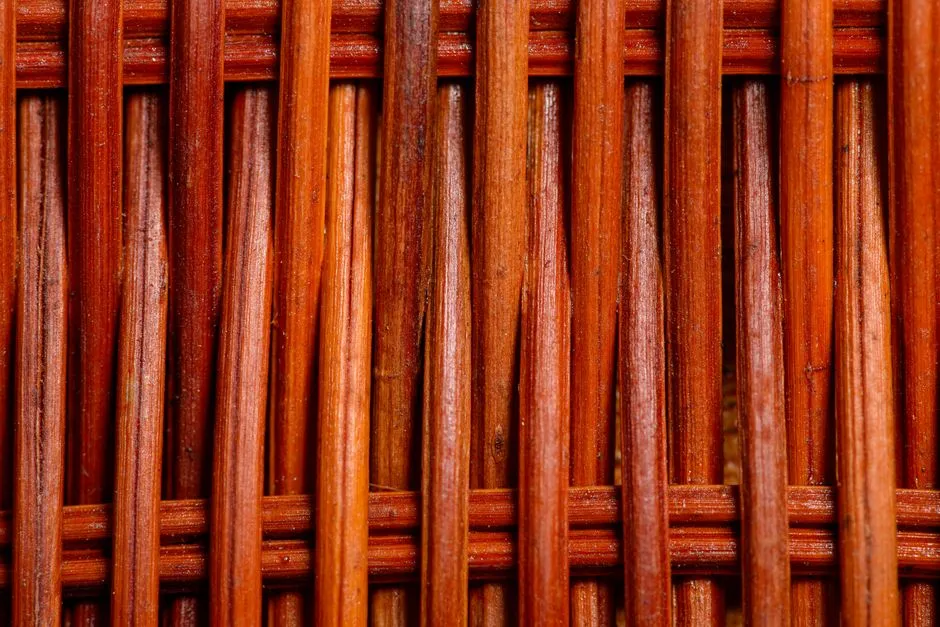
The Short Answer
Rattan and wicker aren't competing materials — they're different categories entirely, which is why the question trips people up. Rattan is a material (a solid tropical palm stalk). Wicker is a weaving technique, and it can be made from rattan, reed, willow, or plastic resin. So a "wicker chair" might be genuine rattan, or it might be synthetic resin woven over a metal frame with no rattan in it at all.
If you want the quick version: buy natural rattan or cane for indoor pieces where you want warmth and texture, and buy quality synthetic (resin) wicker for anything that lives outside or in a humid climate. The rest of this guide explains why, and how to tell what you're actually looking at on a store floor.
Rattan vs Wicker vs Cane: What Each Word Actually Means
These three words get used interchangeably in furniture listings, which causes most of the confusion.
Rattan is a climbing palm that grows across Southeast Asia, harvested for its long, solid stalks. Unlike bamboo, rattan is solid rather than hollow, which is part of why it can be bent into frames and still hold structural weight. Whole rattan poles become chair legs and frames; the stalk can also be split into strips for weaving seats and backs.
Cane is the glossy outer skin peeled from a rattan stalk, split into narrow strips. It's what you're looking at on a caned chair seat or the webbing on a headboard. Cane is a rattan product, not a separate plant.
Wicker is the over-under weaving pattern itself — a construction method that tells you nothing about what's being woven. Historically wicker was worked in rattan, willow, or reed. Today, most wicker furniture sold for patios and porches is woven from synthetic resin (usually a polyethylene material) over a metal frame, marketed as "all-weather wicker." The material has to be checked separately, every time.
For a deeper breakdown of rattan grades, pole diameters, and what quality costs across the category, our rattan furniture guide goes further than there's room for here.
Why the Terms Get Mixed Up
Part of the confusion is historical. Wicker weaving is an old technique, practiced with whatever fiber was locally available — willow in parts of Europe, reed in various regions, rattan once trade routes made it widely available in the West. Rattan turned out to be an especially good wicker material because it's flexible when worked and strong once dry, so by the time rattan furniture became popular the two words had already begun to sound like synonyms in everyday use. Retailers haven't done much to un-confuse it since — plenty of listings use "wicker" as a style descriptor without specifying the material at all, which is exactly the gap this guide is meant to close.
Quick Comparison
| Natural Rattan | Cane | Synthetic (Resin) Wicker | |
|---|---|---|---|
| What it is | Solid palm stalk, whole or split | Outer skin of rattan, woven flat | Plastic resin strands over metal frame |
| Best use | Indoor furniture, accent pieces | Chair seats/backs, headboards | Outdoor patio, poolside, humid climates |
| Weather resistance | Poor outdoors; indoor only unless specially sealed | Poor; indoor only | Good; UV-stabilized versions hold up for years |
| Typical feel | Warm, natural texture, slight grain variation | Light, airy, slightly fragile | Uniform, glossy, more plastic-like |
| Repairability | Can be re-caned or re-woven by a specialist | Can be replaced or re-caned | Usually replaced as a unit, not repaired |
| What to check first | Solid (not hollow) poles, and tight binding wrap at every joint | Whether the panel is hand-woven strand cane or pressed sheet cane | Resin type (polyethylene weathers better than PVC), strand thickness, and aluminum vs uncoated steel frame |
| Price pattern | Mid to higher for solid handwoven pieces | Lower to mid | Broad, and it tracks resin and frame spec more than appearance |
Prices vary too much by brand, frame material, and retailer to quote fixed numbers — treat the patterns above as a starting point for comparison shopping, not a quote.
Which One to Buy: Three Common Situations
Natural Rattan — for indoor statement pieces
Why it wins here: Rattan's biggest strength is character. No two woven panels look quite identical, the material has a warm honey-to-brown tone, and it ages with a soft patina rather than looking worn out. It's also genuinely strong for its weight — solid rattan poles can be bent into curved frames without losing structural integrity, which is why you see it in lounge chairs and headboards.
Worth knowing: Untreated rattan doesn't like extremes. Prolonged damp will encourage mold, and very dry heat (think a sunny window or forced-air heating) can make it brittle and prone to cracking over years. Keep it indoors, out of direct blasting sun, and away from radiators.
Synthetic (Resin) Wicker — for patios and humid climates
Why it wins here: Quality resin wicker is built specifically to survive rain, UV exposure, and pool chemicals in a way natural fiber can't. The resin strands don't absorb moisture, and better product lines use UV-stabilized resin that resists the yellowing and brittleness cheaper plastics develop after a season or two in direct sun.
Worth knowing: Quality varies enormously within "synthetic wicker" as a category. Thin, unstabilized resin over a bare steel frame will fade and crack faster than most buyers expect, and once it's brittle it usually gets replaced rather than repaired. Check the frame material (aluminum resists rust better than uncoated steel) as closely as the weave itself.
Cane — for lightweight, mid-century-leaning pieces
Why it wins here: Cane is airy in a way solid rattan and resin aren't — it lets light through, which is why it shows up so often on chair backs and cabinet doors where you want visual lightness. It's also generally gentler on the budget than a fully solid rattan piece, since less raw material goes into a woven cane panel.
Two kinds of caning, and the difference matters more than the look: Hand-woven cane (also called strand cane, or simply hand-caning) is woven strand by strand through a ring of small holes drilled around the seat opening, then pegged off. Pressed cane — also sold as sheet cane, machine cane, or cane webbing — arrives as a pre-woven sheet that drops into a routed groove around the opening; a length of reed spline is then driven down into that groove over glue to lock the sheet in place. If a chair seat has a continuous groove line rather than a ring of drilled holes, you're looking at pressed cane. Most inexpensive caned furniture made in recent decades uses it, because fitting a sheet takes a fraction of the time hand-weaving does.
Worth knowing: Pressed cane is the more fragile of the two under daily use. The sheet stretches and sags over time, and if the seat is loaded hard or the glue underneath dries out, the spline can lift out of its groove and release the edge of the webbing — that's the failure people describe as the seat "popping out." Hand-woven strand cane spreads load across individual strands and tends to fail one strand at a time instead. Repair runs the other way: replacing a sheet of cane webbing and its spline is comparatively cheap, and a common DIY job, while re-caning a seat by hand is slow, skilled work priced accordingly. If you're buying a caned chair you intend to sit in daily, ask which construction it is — and if the answer is pressed cane, run a finger around the edge to check the spline sits flush and tight the whole way around.
How to Judge Quality When You're Shopping
A few checks work across all three categories:
- Weave consistency. Even spacing and tension across the whole piece signals careful construction; loose, uneven strands are an early warning sign, especially in cane and synthetic wicker.
- Joinery, not just weave. The weave is the visible part, but the frame underneath does the structural work. Push gently on arms and legs — a solid piece won't flex or creak at the joints.
- Ask what's actually woven, not just what it's "styled" as. "Wicker" on a tag tells you nothing about material. Ask directly whether it's rattan, reed, or resin, and what the frame is made from.
- Sun and weather claims should be specific. "Weatherproof" without detail on resin type or UV treatment is a marketing word, not a spec. It's fine to buy budget resin furniture for occasional outdoor use — just don't expect it to perform like a UV-stabilized line.
- Look at the underside and back, not just the front. Showroom-facing surfaces get the most attention during manufacturing; flipping a piece over or checking the back of a woven panel is usually where shortcuts (glue, staples, uneven strand spacing) show up first.
Care and Longevity
Natural rattan and cane both do best with occasional dusting, an out-of-direct-sun placement, and moderate indoor humidity — too dry and the material turns brittle, too damp and it invites mold. Caned seats in particular benefit from a light wipe with a barely damp cloth rather than a soak, since water sitting in a spline groove will soften the glue holding the webbing down. For a full routine, including how to clean without damaging the weave, see our rattan furniture cleaning guide.
Synthetic wicker is lower-maintenance by design: a hose-down and mild soap handle most dirt, and there's no risk of water damage the way there is with natural fiber. Its longevity depends far more on how it was built than on how it's cared for — resin quality, UV exposure, and the frame beneath the weave. A UV-stabilized weave on an aluminum frame will outlast a nicer-looking weave over uncoated steel, because rust at the joints retires a set just as surely as a cracked strand does.
If you're curious about the raw material itself — how rattan is actually harvested, and why supply and sustainability questions come up in this category — where rattan comes from covers that in detail.
The Bottom Line
"Rattan vs wicker" isn't really an either/or choice, because wicker describes a weave, not a material. The real decision is between natural fiber (rattan or cane, best indoors) and synthetic resin (best outdoors or in humid climates), with cane sitting inside the natural camp as the lighter, more delicate option. Once you know which environment the piece is going into, the material choice mostly makes itself — and from there, it's about checking weave consistency, frame quality, and honest weather claims rather than trusting the word "wicker" on its own.