Thai Silk Guide: How It's Made, Graded & Priced
- Thai Silk at a Glance
- How Thai Silk Is Actually Made
- How Thai Silk Is Graded
- Weighing Your Options
- What Thai Silk Should Cost
- Matching Weight and Weave to the Project
- Thai Silk vs. Other Regional Silks
- Questions Worth Asking Before You Buy
- Spotting Imitations Before You Buy
- Thai Silk vs. Other Southeast Asian Textiles
- Caring for Thai Silk
- The Bottom Line
Thai Silk at a Glance
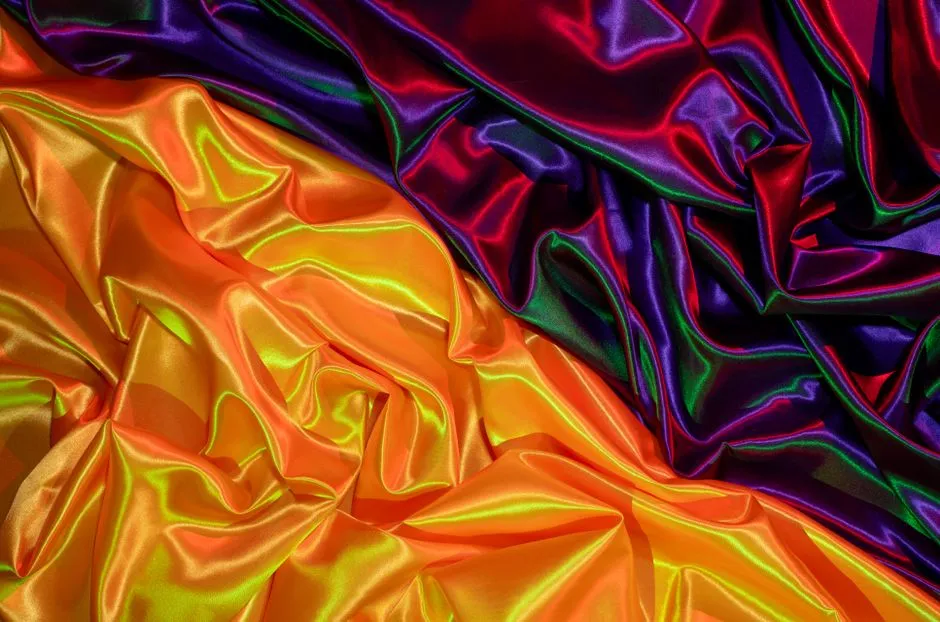
Thai silk is woven from the cocoons of Bombyx mori, the mulberry silkworm, using threads dyed before weaving so the fabric shifts color as the light hits it — the shimmer people mean when they say "shot silk." Traditionally it is woven by hand on wooden frame looms, and the best pieces still are. But "Thai silk" as a commercial category is broader than that: a large share of what's sold under the name today is power-loom woven, and Thailand's own authentication system explicitly recognizes industrial production as a legitimate tier. That two-tone iridescence, plus the slightly irregular, slubby hand-feel of hand-woven cloth, is what separates genuine Thai silk from the smoother, flatter silks and the silk-look polyesters sold under the same name.
If you're buying for the first time, here's the short version:
- For pillow covers and light accents: single-ply, dress-weight Thai silk gives you the shimmer at the lowest cost.
- For upholstery, drapery, or heirloom pieces: look for two-ply, hand-reeled silk, ideally with a government authentication mark (more on that below) — it costs more but holds up to years of light and handling.
- For everyday budget pieces: machine-woven Thai silk or silk-cotton blends are honest, lower-cost options — just don't pay hand-woven prices for them.
The rest of this guide walks through how the fabric is actually made, how it's graded, what it should cost, and how to avoid paying silk prices for a printed imitation.
How Thai Silk Is Actually Made
Thai silk production is concentrated in Thailand's northeast (Isan) region, particularly around Nakhon Ratchasima and Surin provinces, where sericulture — raising silkworms and reeling their cocoons into thread — has been a village-level craft for generations. The process runs, in rough order:
- Cocoon reeling. Cocoons are boiled and the silk filament is reeled off by hand or machine. Hand-reeled thread is thicker and less uniform than machine-reeled thread, which is part of why handwoven Thai silk has its characteristic texture.
- Dyeing. Thread is dyed before weaving (not after), often in small batches, which is what allows the warp and weft to be different colors.
- Weaving. Traditional Thai silk is woven on hand or foot-pedal frame looms. Output depends heavily on the pattern: a weaver running a plain weave may finish a few meters in a day, while complex mudmee (Thai ikat) patterning — where the weft threads are tie-dyed to a design before they ever reach the loom — commonly yields well under a meter a day. That labor gap is the main reason hand-loomed silk costs more than machine-woven fabric.
- Finishing. Washing, pressing, and sometimes a light starch or sizing to stabilize the weave before it's cut and sold.
The industry's modern revival is usually told as the story of Jim Thompson, an American who, after World War II, helped organize and market Thai silk weaving into an internationally recognized craft; the company that bears his name remains one of the best-known Thai silk producers today, though it is far from the only source. That framing leaves out most of the picture. The skills he marketed belonged to the weaving households — overwhelmingly women, many of them in Isan villages — who had kept hand-reeling, mudmee tie-dyeing, and loom work alive as household production long before there was an export market for it. Running alongside the commercial revival was a second effort driven by royal patronage: Queen Sirikit's SUPPORT Foundation, established in 1976, funded training, raw materials, and market access for rural weaving households and made hand-weaving a viable supplementary income again. That royal-backed program is the direct ancestor of the peacock mark certification the trade relies on today.
How Thai Silk Is Graded
Unlike diamonds or many gemstones, there is no single universal grading scale for silk. In Thailand, the most recognized quality signal is the peacock mark, a state certification scheme launched in 2002 under royal initiative and administered by the Queen Sirikit Department of Sericulture, part of Thailand's Ministry of Agriculture and Cooperatives. It exists to distinguish traditional production from mechanized or blended alternatives, and it takes the form of a physical label applied to certified fabric. It runs in four tiers:
| Mark | What it generally signals | Typical use |
|---|---|---|
| Gold Peacock | Traditional, largely hand-reeled and hand-woven silk using domestic Thai silkworm cocoons | Fine textiles, heirloom pieces |
| Silver Peacock | Traditional-style production with some mechanized steps | Mid-range decorator fabric |
| Blue Peacock | More modernized, industrial production methods | Everyday apparel and home textiles |
| Green Peacock | Silk blended with other fibers | Budget-friendly blends |
Two things are worth noting about that table. First, the scheme certifies industrial and blended silk as well as hand-woven silk — a Blue or Green mark is not a fake, it is an authenticated description of how the fabric was made. Second, the mark is a label on goods, not a claim on a website: if a seller invokes it, ask which tier, and ask to see the label itself.
Outside this official system, retailers commonly describe silk informally by:
- Ply count — single-ply vs. two-ply (or "twin") thread. Two-ply thread is thicker, more durable, and typically more expensive.
- Weight — lighter weights suit garments and pillow covers; heavier weights suit upholstery and drapery. Sellers may quote weight in grams per square meter (gsm) or in momme, the traditional silk unit; one momme is roughly 4.3 gsm, so a 16-momme fabric is around 70 gsm.
- Hand vs. machine woven — hand-woven fabric usually shows small, natural irregularities in the weave; machine-woven fabric is more uniform.
None of those descriptors carry legal force. In the US, textile labeling law — the FTC's Textile Fiber Products Identification Act — covers fiber content, country of origin, and manufacturer identity; it says nothing about ply, loom type, or "grade." That is the norm in home textiles rather than the exception. Thread count for cotton sheets gets quoted as though it were a standard, but no law defines or enforces it either; the common industry test method is voluntary, and the FTC has had to warn sellers about inflated counts produced by tallying the individual plies inside a multi-ply yarn. Treat silk grading claims the same way you should treat a thread-count number: a starting point for questions, not a guarantee.
Weighing Your Options
Hand-Reeled, Hand-Woven Silk
Why it's the reference point: This is the closest thing to traditional Thai silk as it has been made for generations — hand-reeled thread, hand-dyed in small batches, woven on manual looms. It gives you the deepest, most irregular shimmer and the most texture under the hand.
Worth knowing: It's the most expensive tier by a wide margin, and quality still varies by weaver and workshop — a peacock mark or a reputable retailer name matters more here than almost anywhere else in the buying decision.
Machine-Reeled, Hand-Woven Silk
Why it's a reasonable middle ground: Machine-reeled thread is more uniform, which speeds up weaving and lowers cost, while hand-weaving still gives you real fabric structure (not a print) and some of the visual depth of fully traditional silk.
Worth knowing: The slubbed, irregular texture that reads as "authentic" Thai silk is noticeably reduced compared to fully hand-reeled thread. If texture is the main reason you want Thai silk, this tier can feel like a compromise.
Machine-Woven Silk or Silk Blends
Why it's the practical budget choice: Machine looms produce consistent, affordable yardage, and blends (silk with cotton or polyester) bring the price down further while keeping some silk sheen. This is a legitimate way to get the look for pillow covers, small accents, and — specifically in a silk blend — for higher-wear places where pure silk would abrade quickly.
Worth knowing: The loom does not change the fiber. A machine-woven pure silk is no more abrasion-resistant than a hand-woven pure silk of the same weight, so "machine-woven" is not a durability upgrade for seating; the added toughness in that last case comes from the cotton or synthetic in a blend. The two-tone iridescent shimmer is also usually flatter than in traditional woven-and-dyed silk, and blends lose some of silk's characteristic cool, smooth hand-feel. The problem isn't the product — it's when it's marketed as hand-woven traditional silk at hand-woven prices.
What Thai Silk Should Cost
Prices vary widely by weight, ply, weave complexity, retailer, and whether you're buying in Thailand or importing, so treat the figures below as editorial ranges rather than quotes. They describe fabric sold by the yard or meter, in US dollars, at the time of writing:
- Silk-blend fabrics (silk with cotton or polyester): usually the least expensive option, often in the $10–$25 per yard band — closer to quality cotton or linen than to pure silk.
- Machine-woven pure silk, dress weight (roughly 60–90 gsm, or mid-teens momme): commonly around $20–$45 per yard. This is the realistic entry point for genuine silk.
- Two-ply, hand-woven decorator or upholstery weight (roughly 150–300 gsm): frequently $60–$150 per yard, and higher for intricate mudmee patterning, reflecting the labor of hand-reeling and slow hand-loom weaving.
Ask what unit a price is quoted in before comparing — a "per meter" price is about 10% higher than the same number quoted per yard for the same fabric, and Thai sellers often quote per meter. As a rule of thumb, if a "hand-woven Thai silk" is priced at or below common polyester "silk-look" fabric, ask the seller directly what fiber content and weaving method you're actually paying for.
Matching Weight and Weave to the Project
Not every Thai silk is meant for the same job, and weight is the single biggest factor in whether a fabric will hold up where you put it:
| Use in the home | Weight to look for | Why |
|---|---|---|
| Pillow covers, table runners | Light to medium | Drapes well, shows shimmer clearly, doesn't need heavy durability |
| Drapery | Light to medium | Needs to move with airflow; very heavy silk hangs stiffly |
| Upholstery on lightly used chairs | Medium to heavy, tightly woven | Needs abrasion resistance beyond what dress-weight fabric offers |
| Wall hangings, framed textile art | Any weight | Not subject to wear, so choose based on pattern and color alone |
| High-traffic upholstery (sofas, dining chairs) | Not recommended in pure silk, hand- or machine-woven | Silk is a comparatively delicate fiber regardless of loom type; consider a silk blend or a different material for heavy daily use |
If you're planning to use Thai silk on furniture rather than as an accent, it's worth asking the retailer directly about abrasion or rub-count ratings — reputable decorator-fabric sellers will have this information, and vague reassurance without numbers is a sign to keep shopping.
Thai Silk vs. Other Regional Silks
Shoppers sometimes compare Thai silk to Chinese and Indian silk, since all three are widely available and often marketed similarly. One clarification first: Thai silk and most Chinese silk come from the same insect, Bombyx mori, so both are mulberry silk. Names like habotai and charmeuse describe a weave or finish, not a different fiber. The differences below come from how the thread is reeled, dyed, and woven — not from a different worm.
| Typical texture | Typical color effect | Common home uses | |
|---|---|---|---|
| Thai silk (mulberry silk, often hand-reeled) | Slightly slubby, textured hand | Strong two-tone iridescence from contrasting dyed threads | Pillow covers, drapery, accent pieces |
| Chinese mulberry silk in smooth weaves (habotai, charmeuse) | Smoother, more uniform | Softer sheen, less pronounced color shift | Apparel, lighter drapery, linings |
| Indian silks (varies widely by region and type, including wild silks like tussar) | Ranges from smooth to noticeably coarse depending on type | Varies widely; some types include metallic thread work | Apparel, saris, decorative textiles |
These are broad generalizations rather than fixed rules — production methods within each country vary by region and workshop, and high-end and budget versions exist everywhere. The practical takeaway is that "silk" alone doesn't tell you much; weight, weave, and production method matter more than country of origin for predicting how a fabric will perform in your home.
Questions Worth Asking Before You Buy
A short list to bring into any conversation with a retailer, whether you're shopping in person or online:
- Is this fabric 100% silk, or a blend — and if blended, what's the fiber percentage?
- Is it hand-woven or machine-woven, and hand-reeled or machine-reeled thread?
- Does it carry a peacock mark or other traceable quality certification, and which tier?
- What weight is it, in gsm or momme, and what's it best suited for?
- Is the color dyed into the thread (woven-in shimmer) or printed onto finished fabric?
A retailer who can answer these specifically is generally a more trustworthy source than one who leans on marketing language like "premium" or "luxury" without backing it up.
Spotting Imitations Before You Buy
Printed polyester and rayon sold as "Thai silk" is common in tourist markets and low-cost online listings, because the shimmer pattern is easy to fake visually even though the fiber and hand-feel are completely different. The short version: get fiber content in writing, look closely to see whether the two-tone effect comes from differently colored threads crossing in the weave or from a pattern printed on the surface, and feel for silk's cool, slightly dry hand rather than a slicker synthetic one.
A burn test can confirm fiber type — silk generally self-extinguishes and smells like burnt hair, while most synthetics melt and smell chemical — but it destroys whatever you burn, is unreliable on blends, and needs basic precautions: use a loose thread or a tiny swatch from a seam allowance rather than the visible piece, work over a non-flammable surface such as a ceramic dish or a metal sink, keep the flame in a ventilated room well away from other fabric, and have water within reach. For the full step-by-step version of every test, see How to Tell Real Thai Silk From Fake.
Thai Silk vs. Other Southeast Asian Textiles
Thai silk is often shopped alongside Indonesian batik and regional ikat weaving, but the techniques are quite different: batik is a wax-resist dyeing method applied to woven fabric (commonly cotton, sometimes silk), while ikat involves tie-dyeing the yarns before weaving to create a pattern — the same principle as Thai mudmee. If you're deciding between them for a project, our guides on ikat vs. batik and the batik buying guide cover how to evaluate each on its own terms — hand-drawn versus stamped versus printed, and what that should mean for price. For how silk fits into a whole room rather than a single piece, see our Southeast Asian home decor guide.
Caring for Thai Silk
- Dry clean or hand wash cold, and only hand wash if you've confirmed the dye is colorfast on an inconspicuous corner first — many hand-dyed silks bleed.
- Keep it out of direct sun for long stretches; silk fibers degrade and colors fade faster under UV exposure than most synthetics.
- Press on the reverse side with a cool iron and a pressing cloth; direct high heat can scorch or create shine marks.
- Store folded in breathable fabric, not plastic, in a dry space — silk can be damaged by long-term humidity and by the trapped moisture plastic bags create.
The Bottom Line
Hand-woven Thai silk earns its price through hand-reeled thread, small-batch dyeing, and slow loom work — real costs that machine production and synthetic imitations don't carry. But hand-weaving is not what defines the category: plenty of authentic, certified Thai silk comes off power looms, and that silk is an honest product at a lower price point as long as it's sold as what it is. The real risks are paying hand-woven prices for machine-woven cloth, and paying silk prices for printed polyester — which is why fiber content, weave construction, weight, and a verifiable mark matter far more than any single "grade" claim on a tag.