Southeast Asian Home Decor: The Complete Style Guide
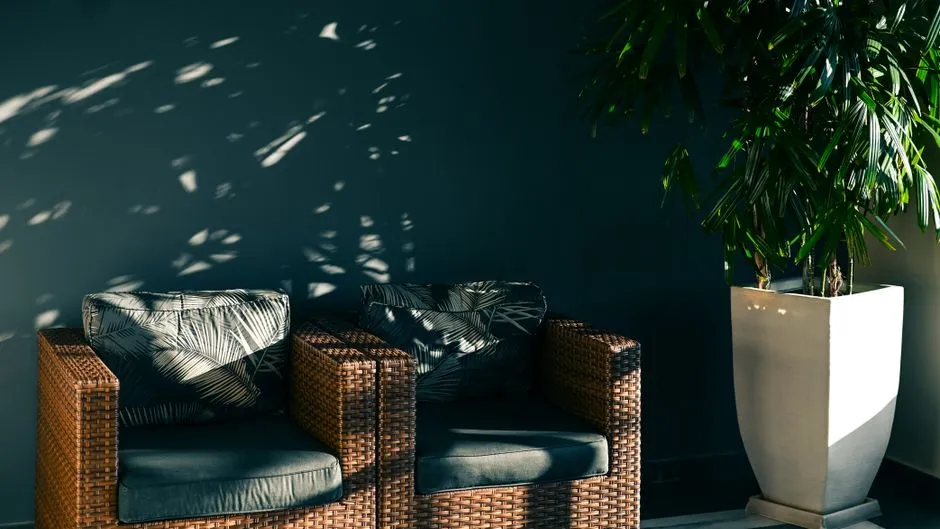
What Southeast Asian Home Decor Actually Covers
"Southeast Asian home decor" gets used loosely online to mean anything with a plant and a rattan chair. The real style is more specific: it's built from a small set of regional materials and crafts — rattan and cane, teak, Thai silk, Indonesian batik and ikat, and lacquerware — each with its own construction standards, price range, and honest-vs-imitation problem. Get the materials right and the "tropical," "Bali," or "Indochine" look follows on its own; get them wrong and you end up with a themed room instead of a furnished one.
This guide is a map of that material landscape: what each one is, what separates a well-made piece from a shortcut version, roughly what to expect to pay, and how to combine them so the room reads as considered rather than costume.
The short version: build the room's structure around one or two pieces in rattan or teak, bring in color and pattern through a genuine textile like silk or batik, add a woven light fixture for warmth, and finish with two or three small objects — a lacquer bowl, a carved panel, a woven basket — rather than a dozen. That ratio, more than any specific product, is what makes the style work.
How This Guide Judges a Material
We don't sell anything, so there's no product to steer you toward. Every material below is assessed against the same four questions, in this order:
- Material identity. Is the thing what the listing says it is — natural rattan or plastic resin, solid teak or teak-veneered MDF, reeled silk or printed polyester — and can a buyer verify it before paying? A material that's easy to imitate and hard to verify gets marked down regardless of how it looks.
- Construction. How the piece is put together: whether woven joints are bound or stapled, whether joinery is pinned as well as glued, whether a lacquer finish is built up in layers or sprayed on in one pass.
- Provenance and documentation. Where the raw material came from and whether that claim is backed by anything — a certificate number, a named country of harvest, a described technique — or just an adjective on a tag.
- Care burden and price, last. What the piece costs you in maintenance over years, and only then whether the asking price is consistent with the first three answers. Price is a check on the other criteria, not a criterion on its own.
Price figures in this guide are broad editorial ranges for orientation, drawn from what these categories typically sell for across mainstream retailers. They are not quotes, and they aren't a substitute for confirming a current price with the seller.
The Five Materials Worth Knowing
Each of these anchors a different part of a room. None of them need to appear together in force — one or two done well outperform a room that tries to include all five.
1. Rattan and Cane — the woven structure
Rattan is a solid, load-bearing palm stem used to build chair and sofa frames; cane is the thin, split outer layer of that same stem, typically woven into flat webbing for seat panels, cabinet fronts, and headboards. Between them they're what the style's woven seating is actually made of — the rattan poles are the frame and the cane is the panel, not a surface treatment applied over something else. For heavier load-bearing work, though — a dining table, a sideboard, a bench — teak is the stronger and stiffer material, and that's the one to build those pieces from.
Why it earns the top slot: rattan furniture is genuinely durable when the frame is solid and the joints are properly bound rather than stapled, and it's one of the few natural materials that looks intentionally casual rather than cheap. It's also commonly faked: a lot of "rattan" sold online is woven plastic resin, which is a legitimate all-weather product but a different purchase entirely if you think you're buying a natural fiber piece.
Worth knowing: natural rattan needs indoor or covered conditions and periodic conditioning to avoid drying and cracking, and light-colored open weaves show dust faster than closed weaves. Confirm which one you're buying before you commit to outdoor placement. For frame construction, weave patterns, and realistic price bands, see our rattan furniture guide.
2. Teak — the wood that earns its price over time
Teak is a dense, naturally oil-rich hardwood, historically the standard for outdoor and marine furniture because its own oils resist water and rot without added treatment. It's the strongest and stiffest material in this set, which is why it's what to reach for when a piece has to carry real load — a dining table, a bench, an outdoor set — and outlast a design trend.
Why it earns the slot: left alone outdoors, teak weathers to a silvery gray rather than degrading, and solid teak furniture is genuinely a decades-plus purchase when it's built well. On care, be clear about which environment you're treating: indoors, occasional oiling maintains the honey tone; outdoors, most teak furniture makers advise a sealer rather than an oil, because oil residue on exposed surfaces can feed mildew. Untreated outdoor teak is also a valid choice — the gray patina is cosmetic, not decay.
Sustainability — read this part before you buy. Teak is one of the harder tropical hardwoods to source with confidence, not one of the easier ones, and any guide telling you otherwise is skipping the difficult half of the story. The premium wide-board grade sold for marine and outdoor use comes overwhelmingly from natural, old-growth forest in Myanmar (Burma), where chain of custody has repeatedly failed to hold up. That failure is documented rather than theoretical: EU Timber Regulation enforcement actions against importers, illegal-logging findings, and sanctions on Myanmar timber exports all trace back to the fact that a specific log's origin and legality can't be established. Plantation teak — grown in Indonesia, Central America, and parts of Africa — is entirely real, but it is generally smaller-dimension, faster-grown, lower-grade material. So "plantation teak" on a wide, flawless outdoor table is a claim that needs documentation, not a default you can assume. FSC certification is the check that separates the two: FSC-certified teak exists, but it's a small and specifically labelled subset of the market, not the baseline. Ask for the certificate number and the country of harvest. A seller who can't name either hasn't answered the question, and "sustainable teak" on its own is marketing language rather than evidence. Our explainer on teak sustainability walks through what those certificates do and don't cover.
Worth knowing: teak carries a real price premium over softer woods, and "teak" is sometimes used loosely on cheaper pieces that are actually teak-veneered or a different wood entirely, stained to match. Lift a leaf or look at an unfinished underside — solid teak shows the same grain on the edge as on the face.
3. Thai Silk — the color and texture layer
Thai silk is woven from silk thread, historically hand-reeled from silkworm cocoons and hand-loomed, producing the material's signature shot-color shimmer — a slightly different color visible depending on the angle of light, from using different colored threads for the warp and weft. It's the fastest way to bring saturated color into a room without repainting anything.
Why it earns the slot: nothing else in this material set delivers the same depth of color and light-catching texture in a small footprint — a few silk cushions or a runner do real visual work. Genuine handloomed silk is also a durable, long-lived fiber when it isn't exposed to constant direct sun, which fades and weakens it over time.
Worth knowing: printed polyester and other synthetics imitate the look at a fraction of the price, and they're honest products at that price point — the problem is only when they're sold as "silk." Real silk has a distinctive handfeel and a warm, slightly uneven luster, and it does burn differently from synthetic fiber. But treat the burn test as one weak signal rather than a verdict, for three specific reasons. First, it destroys whatever it touches, so it can only be run on a spare thread, a loose end, or a hidden seam allowance — never on the face of a finished piece. Second, silk-synthetic blends are common, and a blend produces a mixed, ambiguous result: some fibers ash and smell of burnt hair, others melt and bead, and the combined outcome tells you almost nothing about the ratio. Third, rayon, viscose, and other cellulosics are regenerated from plant material and burn much like a natural fiber, so a "passes the burn test" result doesn't rule out a non-silk fabric at all. Fiber content on the label, a clear answer from the seller, and the handfeel and luster together are more reliable than the flame. Full grading and pricing context is in our Thai silk guide.
4. Batik and Ikat — pattern with a technique behind it
Batik is a wax-resist dyeing technique — wax is applied to fabric in a pattern, the cloth is dyed, and the waxed areas resist the dye — traditionally associated with Indonesia and Malaysia. Ikat is a resist-dye technique applied to the yarn before weaving, so the pattern is built into the thread itself rather than printed on the finished cloth; it produces the soft, slightly blurred pattern edges that are its visual signature.
Why they earn the slot: both techniques produce patterns that machine printing can approximate but not fully replicate, and both are legitimate craft traditions with genuine artisan production still happening alongside factory versions. Used as a single accent — a pillow, a wall hanging, a throw — either one adds pattern without overwhelming a room built mostly from solid rattan and teak.
Worth knowing: hand-drawn batik (batik tulis) takes considerably longer to produce than stamped batik (batik cap), and both are different products from printed cotton designed to look like batik. None of the three is a wrong purchase — they're different price points for different budgets, and a factory-printed cotton throw is a perfectly good throw. The only real mistake in this whole guide is paying the artisan price for the machine-made version because the listing wasn't clear about which one it was. Hand-drawn work shows slight irregularities and wax-crackle lines; printed versions are uniform, and the pattern often doesn't penetrate to the reverse side.
5. Woven Lighting and Small Objects — the finishing layer
This is the category that includes rattan and bamboo pendant lights, lacquerware bowls and trays, mother-of-pearl inlay pieces, and carved wood panels. None of these carry a room on their own, but they're where a lot of the style's warmth comes from — the patterned shadow a woven pendant throws, the depth of a properly built-up lacquer finish.
Why it earns the slot: a single well-chosen pendant light does more to establish the mood of a room than almost any other single purchase, because it changes the quality of light itself rather than just adding an object. See our rattan pendant light guide for sizing and weave-quality guidance before ordering anything ceiling-mounted.
Worth knowing: this is the category with the widest gap between artisan and factory versions, and also the one where that gap matters least for everyday use — a factory-made lacquer tray and a hand-built one can both be genuinely serviceable, just at very different price points and with different finish depth. On a real lacquer piece the surface should feel dense and slightly cool, with visible depth rather than a thin plastic-feeling skin. Our Vietnamese lacquerware guide covers what the layering process should produce.
Material Comparison at a Glance
All price ranges below are per finished piece, so the columns compare directly. Yardage-priced goods are noted separately underneath.
| Material | Best for | Typical price per piece* | Care level | Care instructions | Common imitation |
|---|---|---|---|---|---|
| Rattan / cane | Seating, headboards, storage | $150–$1,500+ | Moderate | Keep out of direct sun and damp; condition occasionally | Woven plastic resin sold as natural rattan |
| Teak | Dining tables, benches, outdoor sets | $400–$3,000+ | Low | Sealer outdoors if you want to hold the color; oil indoors only | Veneer or another wood stained to pass as teak |
| Thai silk | Cushions, runners, drapery accents | $25–$150+ | Low | Keep out of prolonged direct sun; dry clean or spot clean | Printed polyester sold as silk |
| Batik / ikat | Wall hangings, throws, pillow covers | $30–$200+ | Moderate | Hand-wash cold, separately, and dry out of direct sun | Machine-printed cotton sold as hand-drawn |
| Lacquerware & objects | Trays, bowls, small furniture accents | $20–$300+ | Low | Wipe with a soft damp cloth; no abrasives or soaking | Sprayed synthetic finish sold as layered lacquer |
*Ranges are broad editorial estimates for orientation only; actual prices vary widely by retailer, size, and craftsmanship. Silk and batik sold by the yard rather than as finished goods typically run in the $20–$100+ per yard band, with hand-drawn batik and handloomed silk at the upper end. Always confirm current pricing with the seller.
How to Style It Without It Reading as a Theme
The failure mode in this style isn't buying the wrong material — it's buying too much of it at once. A room with a rattan sofa, rattan side tables, a rattan pendant, and a rattan mirror reads as a theme; a room with one rattan seating piece, a teak table, and a silk cushion reads as furnished.
A few working guidelines:
- Pick one structural material per room. Let rattan or teak define the seating and case goods, and use the other materials as accents rather than doubling up on structure.
- Let one textile do the color work. A single silk or batik piece — a set of cushions, a runner, a wall hanging — carries more visual weight than several competing patterns.
- Mix in what you already own. This style layers onto existing furniture better than it replaces it; a rattan accent chair next to a plain linen sofa reads more considered than an all-rattan seating group.
- Let the lighting change, even if nothing else does. Swapping a plain fixture for a woven pendant is often the single highest-impact, lowest-cost change in the whole room.
If you want the deeper history behind why these elements combine the way they do, see our explainer on Indochine style. One clarification worth making here: "Indochina" is a geographic name for the mainland peninsula between India and China and was in circulation from the early 1800s, well before French rule; French Indochina was the colonial federation of Vietnam, Laos, and Cambodia. The decorative aesthetic didn't produce the name — the territory's name was later attached to the aesthetic. And Indochine style is one distinct expression within Southeast Asian decor, not a Western label for the whole of it. It doesn't cover Indonesian batik, ikat, and teak, or Thai silk — three of the five material families this guide is built on.
What to Check Before You Buy
Across every material here, the same three questions separate a good purchase from a disappointing one:
- Is the material what it claims to be? Ask directly whether a "rattan" piece is natural or synthetic resin, whether "teak" is solid or veneer, whether "silk" is natural fiber or a blend. Reputable sellers answer this without hedging.
- Is the construction sound, not just the material? Woven joints should be bound, not stapled; wood joinery should be glued and pinned, not just glued; lacquer should feel smooth and built-up in layers, not thin and plasticky.
- Does the price match the claim? Hand-drawn batik, solid teak, and reeled silk all take real time and skill to produce, and they're priced accordingly. A steep discount on a piece claiming full artisan production is a reasonable prompt to ask more questions, not an automatic red flag — but it's worth asking.
Room-by-Room Starting Points
Living room. One rattan or teak seating piece, not a matched set — an accent chair or a two-seat settee against otherwise plain upholstery. Size the rug so at least the front legs of every seating piece sit on it (in most rooms that means 8x10 ft rather than 5x8 ft), then add two or three silk or batik cushions in a single palette, plus one woven floor lamp or pendant. Total count for the room: one structural piece, one light, three textiles, two small objects. Anything past that starts to read as a set.
Bedroom. A rattan or cane headboard sized to the mattress, not the wall — 60 in wide for a queen, 76 in for a king, with 2–4 in of overhang at most. Keep bedside surfaces within a couple of inches of the mattress top so a lamp sits at reading height. Bring the textile in on cushions or a folded throw at the foot rather than on the duvet itself, which fades a large silk or batik panel to a background. One small lacquer tray per nightstand is enough.
Dining area. A solid teak table as the anchor, rattan or cane dining chairs (allow roughly 24 in of table edge per seat), and a properly sized pendant overhead. Measure the table first: a common rule of thumb is a fixture roughly one-half to two-thirds the table's width, hung so the bottom sits about 30–36 in above the tabletop. Undersizing the fixture is a frequent mistake in this setup, and it's hard to fix without rewiring, so it's worth the tape measure. If the table is long, two smaller pendants spaced evenly usually beat one that's slightly too small.
Entry or small vignette. A woven basket, a carved wood panel, and one lacquer object — three items on one surface, varied in height, is the standard grouping. Hang wall pieces with their center around 57–60 in from the floor so they land at eye level. This is the smallest, cheapest way to establish the style in a space too small for furniture changes, and it's the most renter-friendly, since nothing here needs more than a picture hook.
The Bottom Line
Southeast Asian home decor holds together as a style because each material does one job well: rattan builds the woven seating, teak carries the structural load, silk and batik provide color and pattern with real technique behind them, and woven lighting and small objects provide warmth and finish. Buy for material honesty and construction quality first, restrain how many materials you combine in one room, and — as above — treat "handmade," "plantation," and "sustainable" as claims to verify rather than words to trust on a label. Factory-made versions aren't the enemy; unclear labeling is. Done that way, the style holds up under daily use, not just in photographs.