How High to Hang a Pendant Light? By Room (With Chart)
- The Short Answer: 30–36 Inches Above a Surface, 7 Feet Above a Floor
- Pendant Height Chart by Room
- Dining Table: 30–36 Inches, and Err Low
- Kitchen Island: 30–36 Inches Above the Counter
- Open Floor, Entryways, and Stairs: The 7-Foot Rule
- Bedside and Low-Hang Pendants: How Low Can You Go?
- Measuring From the Ceiling Instead
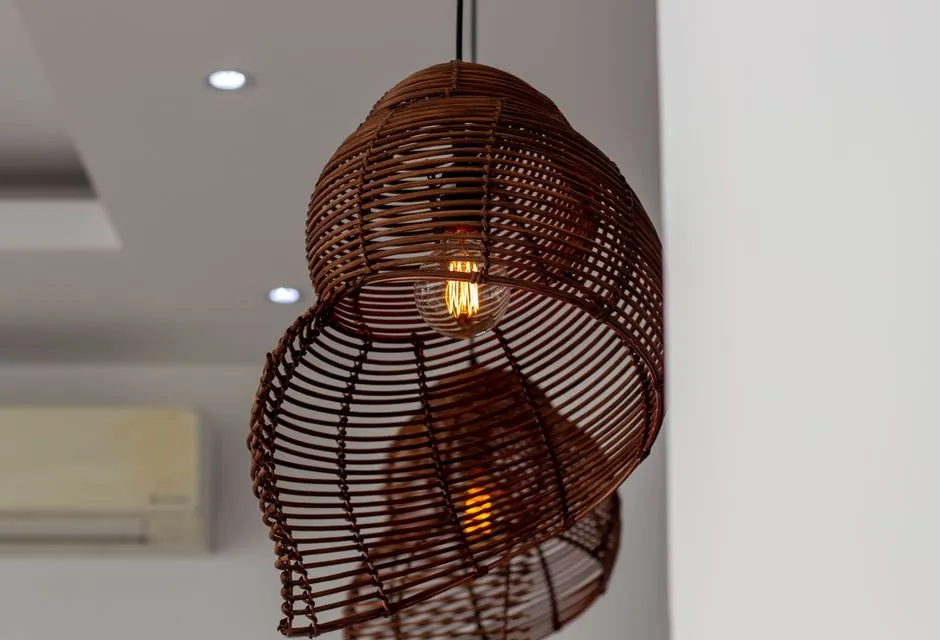
- Worth Knowing: Where the Rules Bend for Woven Pendants
- Quick Recap
The Short Answer: 30–36 Inches Above a Surface, 7 Feet Above a Floor
Nearly every pendant-height question resolves to one of two rules. If the pendant hangs over a surface — a dining table, kitchen island, or counter — the bottom of the fixture should sit 30 to 36 inches above that surface, assuming a standard 8-foot ceiling. If it hangs over open floor where people walk, the bottom needs at least 7 feet (84 inches) of clearance from the floor.
Everything else is adjustment: taller ceilings, bigger fixtures, sloped ceilings, and the particular quirks of woven shades, which behave differently from glass or metal because light passes through the material instead of bouncing off it.
Here is the full chart, then the reasoning behind each number — because the reasoning is what tells you when to break the rule.
Pendant Height Chart by Room
Heights are measured to the bottom of the fixture, not the canopy or cord.
| Location | Height above surface | Height above floor (approx.) | Notes |
|---|---|---|---|
| Dining table | 30–36 in above tabletop | 60–66 in (with a 30 in table) | Lower end for intimate light; higher for large shades |
| Kitchen island | 30–36 in above countertop | 66–72 in (with a 36 in counter) | Keep sightlines open across the island |
| Kitchen sink / prep counter | 30–40 in above counter | 66–76 in | Task lighting can sit slightly higher |
| Open floor / living room | — | 84 in (7 ft) minimum | More if people are tall or the room is large |
| Entryway / hallway | — | 84 in minimum; 90+ in feels better | Door swing matters — check clearance |
| Bedside (replacing a lamp) | 18–24 in above nightstand | 42–48 in | Low is the point; nobody walks under it |
| Bathroom vanity | 30–36 in above counter, or flanking the mirror | varies | Keep fixtures well away from tub and shower zones |
| Two-story foyer | — | Bottom no lower than the second-floor line | Center in the window if there is one |
| Stairwell | — | 84 in above every tread it passes over | Measure from the nosing, not the landing |
Ceiling-height adjustment: these figures assume 8-foot ceilings. For each additional foot of ceiling height, add roughly 3 inches to hanging height over tables and islands. A 10-foot kitchen ceiling puts island pendants at about 36–42 inches above the counter rather than 30–36.
Dining Table: 30–36 Inches, and Err Low
Over a dining table, the pendant's job is to pool light on the food and faces around it, not to illuminate the ceiling. At 30–36 inches above the tabletop, the fixture is low enough to create that pool but high enough that seated diners see each other, not the shade.
Within that range:
- 30–32 inches suits smaller shades, dim-friendly bulbs, and rooms where you want the table to feel like a destination. This is where most woven pendants look best over dining tables — the shade reads as part of the tablescape.
- 34–36 inches suits larger fixtures (24 inches wide and up), households with tall members, and tables that double as workspace, where a low fixture gets annoying fast.
One thing that trips people up: nobody walks under a dining pendant, so the 7-foot floor rule does not apply here. A pendant over a table can — and should — hang far lower than one over open floor. If yours is at head height when you stand at the table's edge, that's normal, not a mistake.
Center the fixture on the table, not the room. If the table sits off-center against a wall, an off-center pendant centered on the table will always look more deliberate than one centered on the ceiling.
Size and height interact: a shade that's too large wants to hang higher, which then weakens the light pool. If you haven't bought the fixture yet, settle diameter first with our pendant light size guide, then set height.
Kitchen Island: 30–36 Inches Above the Counter
Standard counters are 36 inches tall, so the 30–36-inch rule puts pendant bottoms at roughly 66–72 inches off the floor — around or just above eye level for most adults. That's intentional. You want light on the work surface and a clear sightline across the island to the rest of the kitchen.
Practical adjustments:
- Go higher (34–36 inches) with wide or opaque shades. A row of large drum or bowl pendants at 30 inches becomes a visual wall between the island and the room.
- Go slightly lower (30–32 inches) with open-weave shades. Rattan and bamboo pendants let you see through them, so they block sightlines far less than solid shades of the same size — one of the quiet advantages covered in our rattan pendant light guide.
- Mind the bulb. Open weaves expose the bulb at some angles. If you're seated at the island looking up into the shade, a bare high-brightness bulb will glare. A warm LED in the 2200–2700K range at modest brightness solves most of it; a slightly higher hang solves the rest.
For spacing multiple pendants, a reliable starting point is to divide the island into equal segments and center a pendant in each, keeping at least 24–30 inches between fixture centers so the shades read as a rhythm rather than a cluster.
Open Floor, Entryways, and Stairs: The 7-Foot Rule
Anywhere a person can walk under the fixture, keep at least 84 inches between the floor and the pendant's lowest point. That's a minimum, not a target — in an entryway, 90 inches or more feels noticeably more generous, and large statement pendants generally look better with extra air beneath them.
Special cases:
- Doorways and entry halls: check the door swing. Some inswing doors arc surprisingly close to a low-hung entry pendant.
- Stairwells: the 84-inch clearance applies over every tread the fixture passes above, measured vertically from the stair nosing. Fixtures over stairs almost always end up hanging from a longer drop than expected.
- Two-story foyers: keep the fixture's bottom at or above the second-floor line so it reads correctly from both levels. If there's a window above the door, centering the fixture in that window from outside is the classic move.
Bedside and Low-Hang Pendants: How Low Can You Go?
The question "how low should a pendant light hang" has a liberating answer for spots nobody walks under: as low as the function demands. Pendants replacing bedside lamps typically hang with the bottom 18–24 inches above the nightstand — low enough to read by, high enough to avoid glare while lying down. Beside a reading chair, a pendant bottom around 40–48 inches off the floor puts light at book height.
Woven shades are particularly good in these low positions because you see the shade up close: the weave texture, which reads as a silhouette from across a room, becomes the whole show at arm's length. It's also where weave quality is most visible — uneven wraps and glue spots hide at ceiling height but not at eye level. The construction points in our roundup of the best bamboo pendant lights matter double for low hangs.
Measuring From the Ceiling Instead
Some situations — ordering a fixed-rod pendant, briefing an electrician — need the number as a drop from the ceiling rather than a height from the floor. The math is simple, but do it in this order:
- Measure floor to ceiling at the exact hanging point.
- Decide the target height of the fixture's bottom (from the chart above).
- Subtract: ceiling height − fixture-bottom height = total drop, canopy to fixture bottom.
- Subtract the fixture's own body height to get the required cord, chain, or rod length.
Worked example: 96-inch ceiling, dining pendant bottom at 62 inches, fixture body 14 inches tall. Total drop is 96 − 62 = 34 inches; cord length needed is 34 − 14 = 20 inches. Check the fixture's spec sheet for minimum drop — many pendants can't be shortened below the height of their own canopy and body combined.
Sloped ceilings need a sloped-ceiling canopy (many pendants include or offer one) and the measurement taken at the hanging point, not the room's edge — a difference that can easily exceed a foot.
Worth Knowing: Where the Rules Bend for Woven Pendants
Three honest caveats specific to rattan, bamboo, and seagrass shades:
- They're light, and they move. A big woven shade may weigh a fraction of an equivalent glass fixture — good for ceiling boxes, but in breezy spots (near patio doors, under ceiling fans) a lightweight low-hung pendant will sway. Hang slightly higher or pick a heavier-framed shade.
- Pattern throw changes with height. Open weaves project shadow patterns on walls and ceiling. Lower hangs throw wider, softer patterns; higher hangs throw tighter ones. Worth testing at temporary height (a helper holding the fixture, breaker off) before final wiring.
- Cord type limits adjustment. Most woven pendants ship on adjustable cord — easy to fine-tune. Fixed rods and short-corded hardwired models are less forgiving, so confirm maximum and minimum drop before buying if your ceiling is unusually tall or short.
Quick Recap
Thirty to 36 inches above any surface; 84 inches above any floor people cross; add about 3 inches per foot of ceiling over 8 feet; and hang open-weave shades a touch lower than you'd hang solid ones, because you can see through them. Measure to the bottom of the fixture, test the height before the final connection, and let the room's tallest regular occupant have veto power. Get those right and the rest is taste.