How to Style Rattan in a Modern Home (Without Clichés)
The short version
Rattan reads as modern, not boho, when you treat it like a material choice rather than a theme. Pair one or two rattan pieces per room with solid, simple-lined furniture in neutral or dark tones, keep the rest of the palette quiet, and let the weave be the texture that carries visual interest. The mistake that dates a room fast is stacking rattan on rattan — a rattan chair, rattan mirror, rattan basket, and rattan pendant all in the same sightline reads as a costume rather than a considered space. One or two well-placed pieces, each doing a clear job, is the difference between "styled" and "themed."
If you're still choosing pieces rather than placing them, our rattan furniture guide covers construction quality and realistic pricing before you buy.
Why rattan can look dated — and how to avoid it
Rattan's reputation problem isn't the material, it's the styling era it got stuck in. A lot of the "boho rattan" look that peaked in home decor a few years back leaned on matching sets: peacock chairs, macramé, layered rugs, and rattan everything in a warm, sun-bleached palette. None of that is wrong, but it's a specific look, and if your home doesn't lean into the rest of that aesthetic, rattan furniture on its own can feel like a leftover trend.
The fix is contrast. Rattan's natural texture and warmth do the most work when they sit against something plain: a matte black metal frame, a poured-concrete floor, a plain linen sofa, or a smooth painted wall. The material earns its keep as a textural counterpoint, not as the whole room.
Worth knowing: contrast only works if the rest of the room is genuinely restrained. Rattan next to five other busy textures (a patterned rug, heavy florals, ornate mirrors) just adds to the noise instead of standing out.
Pairing rattan with modern materials
The fastest way to modernize rattan is to put it next to materials that read as current: blackened steel, brass, poured concrete, matte ceramic, boucle, and linen. Each pairing shifts the mood slightly, so it's worth choosing on purpose rather than by accident.
| Pair rattan with | Effect | Worth knowing |
|---|---|---|
| Black or bronze metal frames | Sharpens the silhouette, reads industrial-meets-natural | Cheap blackened metal can look flat; look for a slightly textured or matte powder coat |
| Poured concrete or polished floors | Cools down rattan's warmth, feels architectural | Only works if the rattan piece itself is simple-lined, not ornate |
| Linen or boucle upholstery | Keeps the room in one soft, neutral family | Two heavily textured materials in a small space can start to compete rather than complement |
| Brass or gold hardware | Adds a warm, slightly formal note | Easy to overdo — one brass accent piece per room is usually enough |
| Plain painted walls (white, greige, deep green) | Lets the weave pattern be the visual interest | Busy wallpaper behind rattan usually fights the texture instead of framing it |
None of these pairings require buying new furniture wholesale. Swapping out hardware, a lamp, or a rug is often enough to shift a rattan piece from "leftover trend" to "intentional choice."
Room by room
Living room
One rattan seat — a lounge chair, not a full sectional — paired with a plain sofa is the most reliable formula. If you already own a rattan piece that feels dated, check whether the room around it has drifted busy; often the chair isn't the problem, the accumulated clutter around it is. A single woven pendant overhead (see our guide to bamboo pendant lighting for shapes that pair well with modern rooms) can echo the chair's texture without repeating the material.
Bedroom
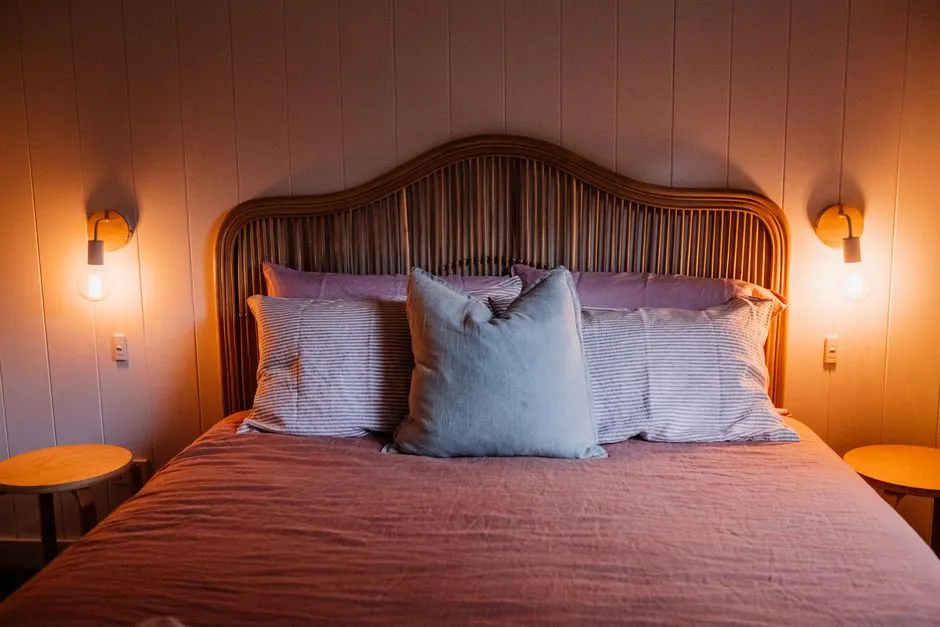
Rattan headboards and bedside tables work well because bedrooms tolerate more texture at a small scale. Keep bedding solid or subtly textured (waffle weave, linen) rather than patterned, so the headboard's weave stays the focal point. A rattan bench at the foot of the bed is a low-risk way to add the material if you're not ready to commit to a headboard.
Dining room
A rattan-backed dining chair around a plain wood or stone table is one of the more timeless combinations in this style, largely because dining chairs are functional first — nobody reads a set of chairs as "themed" the way they might read a whole living room. Mixing rattan chairs with a metal or glass table sharpens the look further.
Home office
Rattan storage baskets and a single accent chair keep a workspace from feeling sterile without adding visual clutter to a room that needs to stay functional. Avoid rattan desks unless the surface is reinforced — woven tabletops flex under sustained weight and aren't ideal for daily work use.
How much rattan is too much
There's no fixed rule, but a useful gut check: in any given room, rattan should appear in no more than two "categories" — seating, lighting, storage, mirrors, and small objects each count as one category. One rattan chair and one rattan pendant reads as intentional. A rattan chair, rattan pendant, rattan mirror, and a rattan basket in the same room starts to read as a set piece rather than a considered mix.
This isn't a purity rule — rattan-heavy rooms can absolutely work, especially in sunrooms or reading nooks built around the material. It's a guideline for anyone trying to fold rattan into an otherwise modern, mixed-material home without it taking over.
Matching rattan tone to the wood you already own
Rattan comes in a range of natural tones, from pale honey to a deep, almost chestnut brown, depending on the cane and how it's finished. Before buying a piece, look at the wood tones already in the room — flooring, existing furniture, window trim — and aim for either a close match or a deliberate contrast, not something in between that reads as slightly off.
- Close match: a mid-tone rattan chair next to mid-tone oak flooring feels cohesive and calm. This is the safer, more forgiving choice for most rooms.
- Deliberate contrast: pale, whitewashed rattan against dark walnut furniture (or the reverse — dark rattan against light Scandinavian-style oak) can look sharp, but it only works if the contrast is clear enough to read as intentional rather than mismatched.
If you're not sure which way to go, a close match is the lower-risk option, especially in a room where rattan is one piece among several other wood tones already competing for attention.
Mixing rattan into a room you're not redecorating
Most people aren't building a room from scratch — they're adding one or two rattan pieces to a space that's already furnished. In that case, start with the piece that has the least competition: a single accent chair in an underused corner, a mirror on an otherwise bare wall, or a pendant replacing a builder-grade fixture. Live with it for a few weeks before adding a second piece.
This slower approach also protects against the "matching set" problem described above. Furniture bought in a single trip, from a single source, in a single finish, tends to look like a set — which is fine for a showroom but rarely how a considered room actually comes together over time.
Common styling mistakes
- Matching finishes too closely. A rattan chair and a rattan side table in the exact same tone can look like a boxed set. Slightly different weaves or finishes (natural vs. whitewashed) read as collected over time rather than bought together.
- Skipping the anchor piece. Rattan looks best next to something solid and grounded — a stone lamp base, a heavy wood table, a plain upholstered sofa. Without an anchor, an all-light, all-woven room can feel visually unstable.
- Ignoring scale. A large, open-weave piece in a small room reads heavy rather than airy. Finer, tighter weaves generally suit smaller spaces; open, chunky weaves suit rooms with more breathing room.
- Treating it as a finished look rather than an ingredient. Rattan is one material among several a room needs — wood tone, metal, textile, and color still have to be decided. Buying rattan pieces first and building the room around them afterward tends to produce a themed result rather than a designed one.
For the broader palette this style draws from — teak, woven textiles, lacquerware, and how they combine — our Southeast Asian home decor guide covers the full material vocabulary this style pulls from, beyond rattan alone.